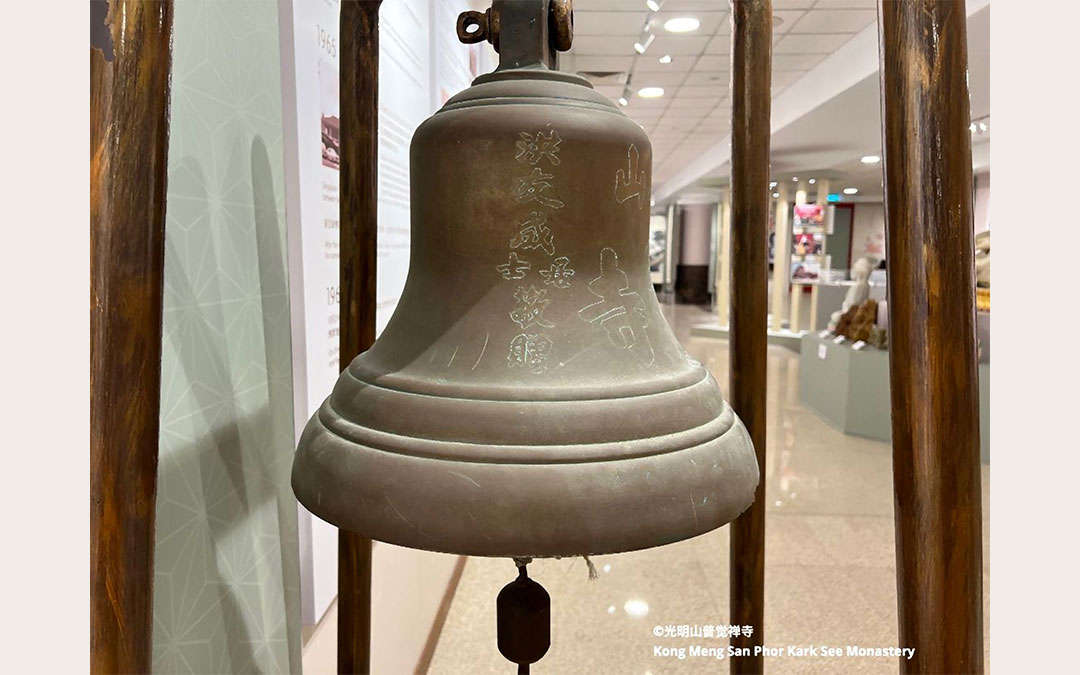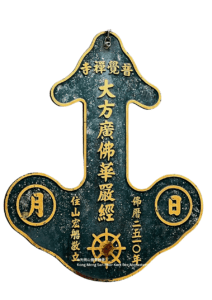
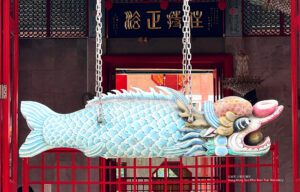
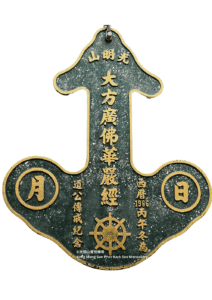
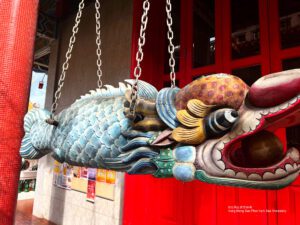
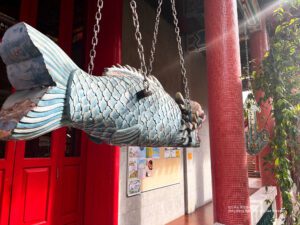
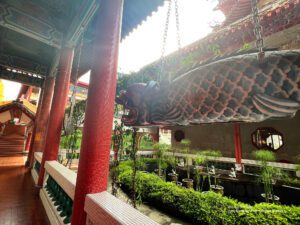
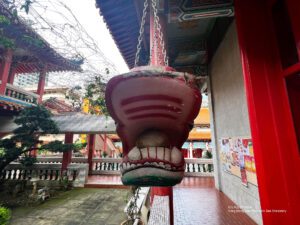
“云板”是华人寺庙(丛林制度)里的日用法器,一般用铁制造,和“梆”成一对。清晨打板起床,听完钟鼓声后接着听到敲打云板的声音。大殿维那师用引磬对接云板的声音,开始早殿的功课。梆则是下殿后过堂前敲打的法器。
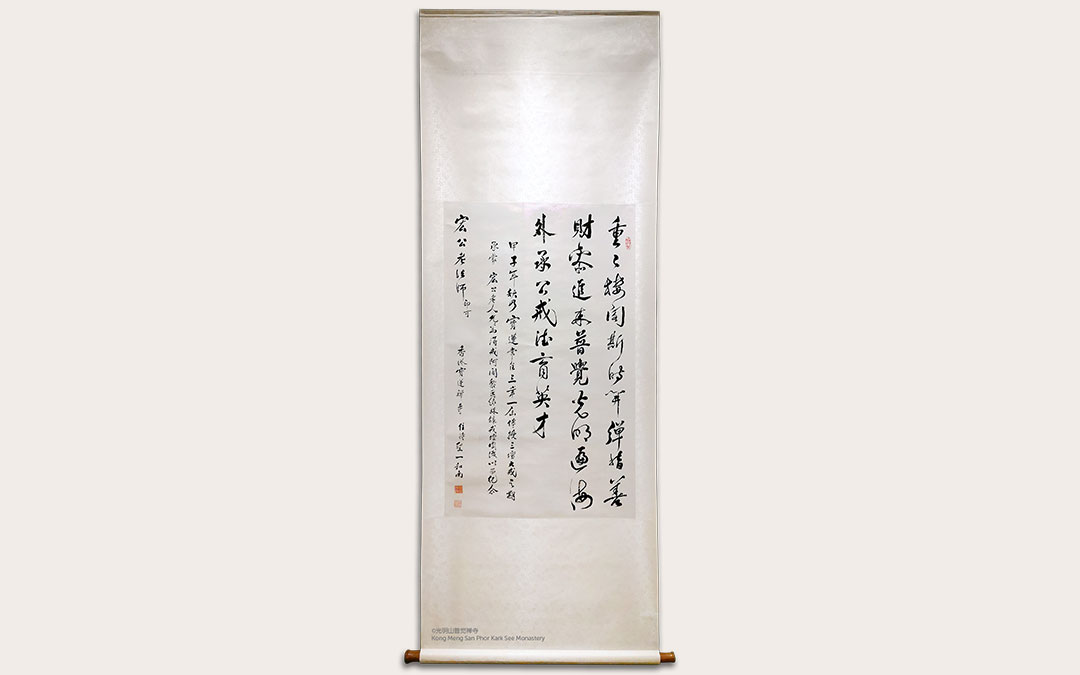
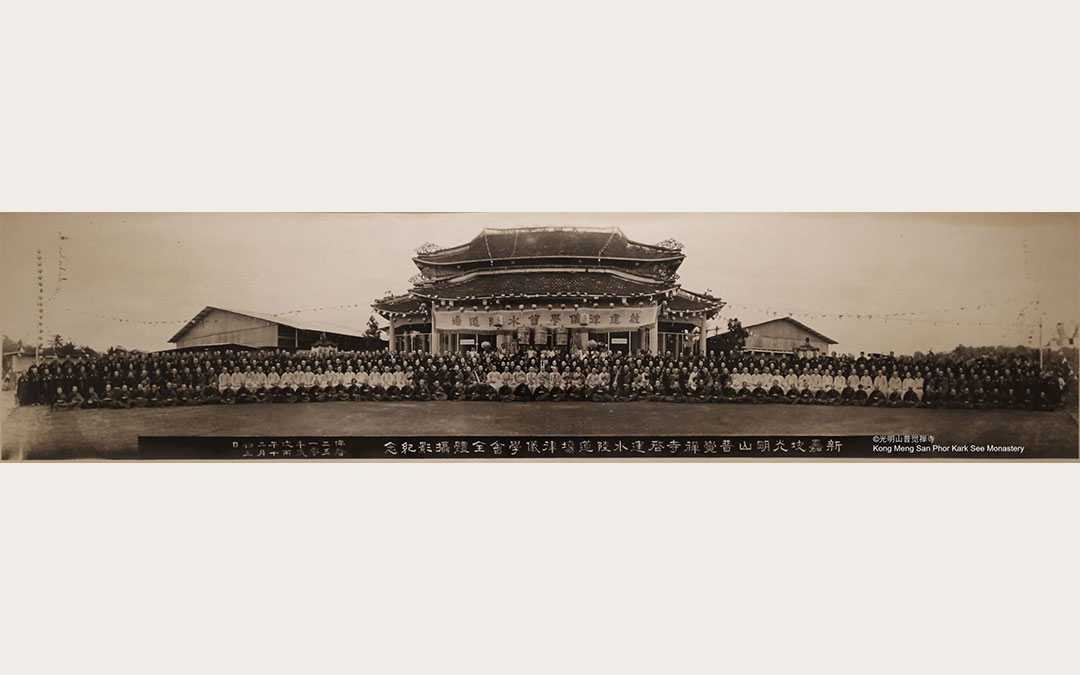
这块置于光明山普觉禅寺内的云板,是为了纪念新加坡1965年建国后,全国于1966年首次举行的佛教水陆法会。
当时的法会是一起举办了三种法会:三坛大戒、启建水陆大斋胜会和“祈祷世界和平大会”。同时也是为了纪念光明山普觉禅寺开山住持转道长老建寺45周年。
现今逢农历年的大年初一,禅寺内仍能听到梆和云板的震震之声。
The umpan found in Chinese Buddhist temples (forest tradition) is an important religious instrument for rites. It is typically made from iron and paired with fish-shaped bar. Mornings in the monastery begin with the striking bell sound, followed by the clattering of the umpan. The Venerable presiding the rites in the veneration hall uses the umpan’s sounds to convey the commencement of the day’s activities. The sounding of the fish-shaped wooden bar is then used to convey the start of another activity.
This umpan found in the Kong Meng San Phor Kark See Monastery is to commemorate the first nation-wide Buddhist puja ceremony – ‘The Grand Prayer that Blesses and Benefits all Sentient Beings’, held in 1966, after Singapore gained independence in 1965. The puja ceremony was conducted for 15 days and was first-of-its kind, having three types of veneration combined – ‘Triple Platform Ordination Ceremony’, ‘The Grand Prayer that Blesses and Benefits all Sentient Beings’ and ‘Grand Prayer for World Peace.’ Simultaneously, its installation is also in memory of the 45th anniversary of the founding Abbot Venerable Sik Zhuan Dao’s establishment of the monastery.
Until today, the distinct sounds of the umpan and the fish-shaped wooden bar can still be heard in the monastery on the first day of every Lunar New Year.